How Drone Technology Is Changing the Way Land Surveys Are Carried Out in the UK
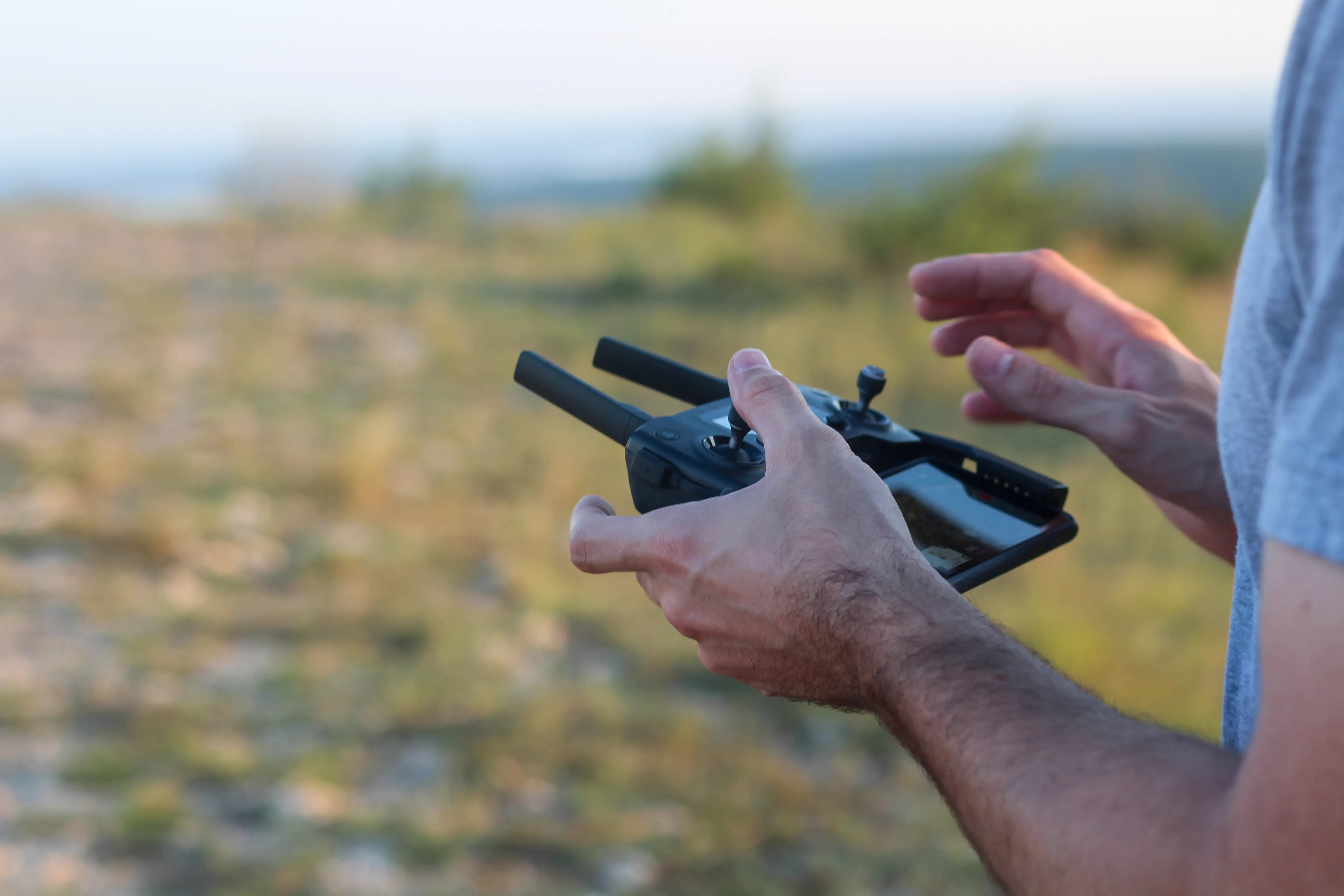
Photography by Giving Campaign Contributors
Published
May 14, 2026
Reading Time
5 min read
Land surveying has been a fundamental part of construction, planning, and property development for centuries. The methods used to gather that data, however, have changed more in the last ten years than in the previous hundred. Across the UK, drone technology has moved from novelty to standard practice in a remarkably short space of time, and the industries that rely on accurate land data have been among the first to feel the difference.
The shift has been driven by a straightforward combination of factors. Drones are faster to deploy than traditional survey crews, can cover ground that is difficult or dangerous to access on foot, and produce data at a level of detail and accuracy that would have required significantly more time and resource to achieve with conventional equipment even a decade ago. For project managers, developers, and land owners working under the pressures of tight timelines and tighter budgets, those advantages translate directly into real operational value.
What Traditional Surveying Looked Like and Why It Had Limitations
Conventional land surveying typically involves a team of surveyors working across a site with total stations, GPS equipment, and levels, recording measurements at intervals to build up a picture of the terrain. For straightforward, accessible sites this approach works well enough, but it becomes progressively more difficult and time consuming as sites grow in size, complexity, or inaccessibility.
Dense vegetation, steep slopes, active construction zones, and sites with restricted access all present genuine challenges to ground-based survey teams. Beyond the practical difficulties, there is also the question of resolution. A ground survey captures data at the points where measurements are taken, which means the accuracy of the resulting model depends heavily on how densely those points are distributed. Achieving high resolution across a large or complex site with traditional methods requires significant time and therefore significant cost.
These limitations did not make traditional surveying inadequate, but they did create a clear opening for a better approach when the technology became available to fill it.
How Drones Have Transformed the Survey Process
A drone equipped with a high-resolution camera or LiDAR sensor can cover a large site in a fraction of the time it would take a ground-based team, capturing thousands of data points per second as it flies a pre-programmed grid pattern over the area. That raw data is then processed using photogrammetry or point cloud software to produce detailed 3D models, contour maps, and digital terrain models that give engineers, planners, and architects an accurate picture of the land they are working with.
The accuracy achievable with modern drone survey equipment is well within the tolerances required for most professional applications. Sub-centimetre accuracy is possible with the right equipment and methodology, which means drone-derived data is increasingly accepted as a primary source rather than a secondary check by engineers and local planning authorities.
Speed is one of the most immediately tangible benefits. A site that might take a ground team several days to survey can often be covered by a drone in a matter of hours, with processed data available within a day or two. For projects where early-stage site intelligence is needed quickly to support planning applications or design work, that turnaround makes a meaningful difference to overall project timelines.
The Role of Topographic Surveys in Modern Project Planning
A topographic survey captures not just the outline of a piece of land but its three-dimensional character, the rises and falls in elevation, the position of existing features, drainage patterns, and the relationship between different parts of the site. This level of detail is essential for any project that involves earthworks, drainage design, foundation planning, or significant landscaping.
Getting this data right at the outset of a project is one of the most effective ways to avoid costly surprises later. Inaccurate or incomplete site data at the design stage can lead to engineering assumptions that do not hold up when groundworks begin, resulting in design changes, delays, and additional expense that could have been avoided with better upfront intelligence.
Drone-based topographic surveying has made this level of site intelligence more accessible to a wider range of projects. Smaller developments and individual landowners who might previously have found the cost of a detailed traditional survey prohibitive can now commission a drone survey and receive a comprehensive, accurate dataset that supports confident decision making from the earliest stages of a project. Pathfinder Drone provides a Topographic Survey service to clients across the UK, working across residential, commercial, and infrastructure projects where accurate terrain data is central to the brief.
Regulation, Safety and Professional Standards in UK Drone Surveying
The rapid growth of commercial drone operations in the UK has been matched by the development of a clear regulatory framework governing how and where drones can be flown. The Civil Aviation Authority oversees drone operations in UK airspace, and commercial operators are required to hold the appropriate permissions and qualifications to fly legally for hire or reward.
For clients commissioning a drone survey, understanding that their chosen operator is fully compliant with CAA requirements is an important part of the due diligence process. It affects not just the legality of the operation but the validity of the data produced and the insurance position in the event of an incident. The CAA publishes clear guidance on the requirements for commercial drone operators, which is a useful reference point for anyone commissioning aerial survey work for the first time.
How the Wider Industry Is Developing
The drone surveying sector in the UK has matured considerably over the last five years, with a growing number of specialist operators bringing professional-grade capability to projects of all sizes. The technology continues to develop rapidly, with improvements in sensor resolution, battery life, and data processing software all pushing the boundaries of what is achievable from an aerial platform.
Able Surveys, operating across Scotland and the wider UK, is one example of a specialist aerial and ground survey company working at the professional end of this market, delivering topographic, measured building, and utility surveys to clients in construction, infrastructure, and land management. The breadth of applications that operators like this are servicing gives a useful indication of just how embedded drone surveying has become in the professional land and property sector.
What This Means for the Future of Land and Property Development
The integration of drone technology into land surveying is not a passing trend. It represents a genuine and permanent shift in how site data is gathered, processed, and used across the construction and development industry. As the technology becomes more capable and the pool of qualified operators continues to grow, the expectation that accurate, detailed topographic data will be available quickly and at a reasonable cost is becoming the norm rather than the exception.
For developers, engineers, architects, and land owners, that shift is largely a positive one. Better data, gathered more efficiently, supports better decisions at every stage of a project. In an industry where the consequences of getting things wrong are measured in time, money, and reputation, that is a meaningful advantage worth taking seriously.
Giving Campaign Editorial
Reporting on independent commerce and local economies. Previously covered retail trends for national publications.
More stories by this author